
Blog
Buy BPC-157 Research Peptide: Analytical Review of Purity and Tissue Repair Applications

In high-stakes laboratory environments, the difference between a breakthrough and a null result often hinges on the integrity of a single molecular sequence. You likely recognize that the current market for research compounds is frequently saturated with inconsistent purity levels and inadequate documentation, factors that directly compromise the reproducibility of your data. This analytical review addresses these systemic failures by providing a technical examination of the BPC-157 pentadecapeptide and the exacting standards required for its procurement. We will detail the specific molecular pathways involved in tissue repair and the rigorous HPLC protocols necessary to buy BPC-157 research peptide that meets a 99% purity threshold. You’ll gain a comprehensive understanding of the current regulatory climate following the HHS policy shifts in early 2026, alongside the procedural safeguards that prevent peptide degradation during cold-chain transit. This guide establishes a definitive framework for sourcing laboratory reagents that adhere to the highest tier of industrial capability and clinical rigor. We conclude with a look at the upcoming July 2026 PCAC review and its implications for the broader research landscape.
Key Takeaways
- Analyze the precise 15-amino acid sequence of BPC-157 and the technical distinctions between naturally occurring gastric pentadecapeptides and synthetic research analogs.
- Examine the molecular mechanisms of tissue repair, specifically the peptide’s interaction with growth hormone receptor pathways and the modulation of the Nitric Oxide system.
- Identify the analytical benchmarks required to buy BPC-157 research peptide with 99%+ purity by interpreting batch-specific HPLC and Mass Spectrometry data.
- Implement rigorous laboratory protocols for the storage and aseptic reconstitution of lyophilized peptides to ensure long-term molecular stability.
- Establish a framework for evaluating supplier transparency through accessible third-party verification and comprehensive Certificates of Analysis.
Defining BPC-157: Molecular Structure and Research Classification
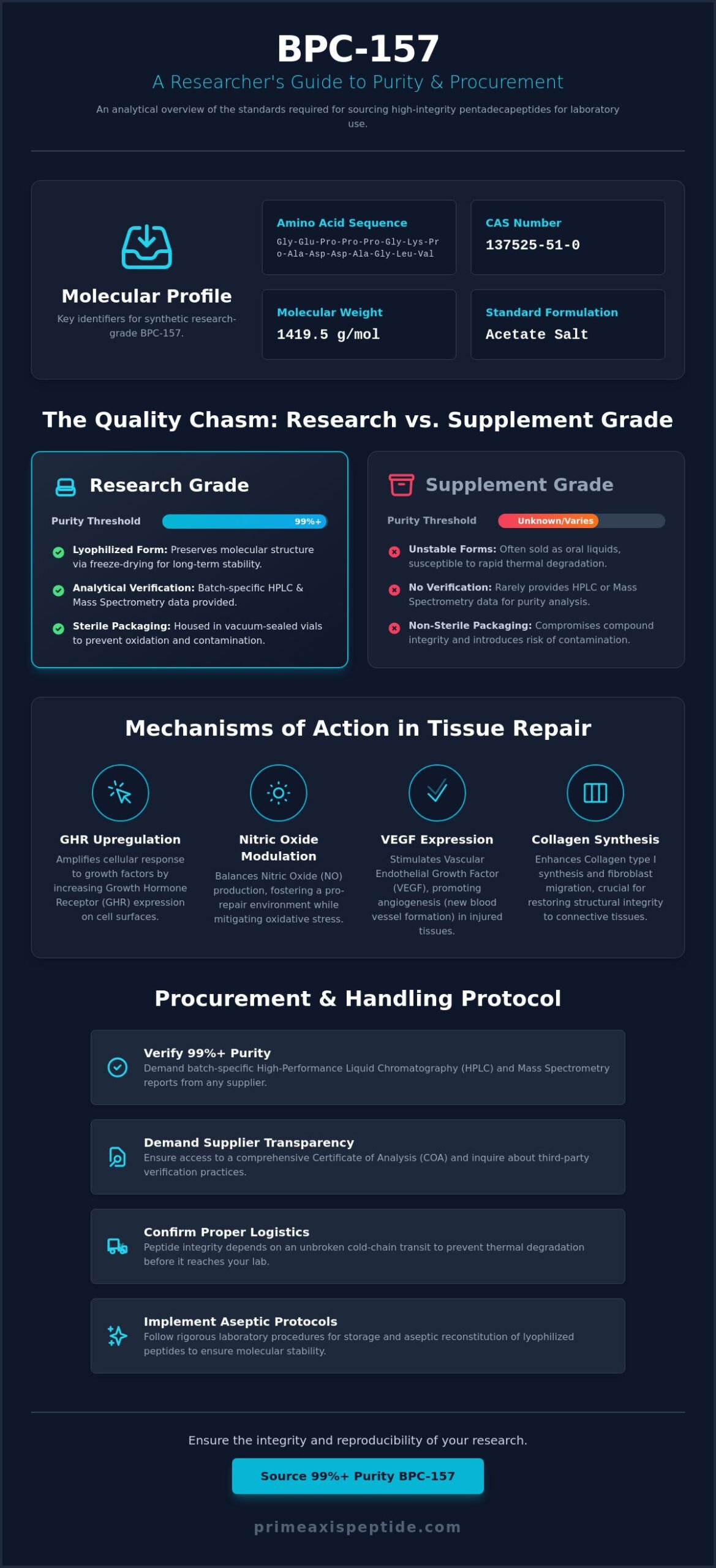
The molecular characterization of BPC-157 reveals a highly specific 15-amino acid sequence: Gly-Glu-Pro-Pro-Pro-Gly-Lys-Pro-Ala-Asp-Asp-Ala-Gly-Leu-Val. While derived from a naturally occurring pentadecapeptide found in human gastric juice, the version utilized in modern laboratory settings is a synthetic analog designed for enhanced stability and experimental consistency. This distinction is paramount for investigators who intend to buy BPC-157 research peptide for rigorous tissue repair studies. Unlike the endogenous variant, which is subject to rapid enzymatic degradation, synthetic BPC-157 is engineered to withstand diverse environmental stressors during the research process.
Molecular Specifications and CAS Identification
Precision in procurement begins with the verification of CAS Number 137525-51-0. This identifier ensures the chemical identity of the compound matches the established literature for the Body Protection Compound. Analytical benchmarks further require a molecular weight of 1419.5 g/mol; any significant deviation from this value indicates potential contamination or an incorrect amino acid sequence. Research-grade BPC-157 is typically provided in an acetate salt form. This salt formulation is preferred in laboratory environments because it maintains the peptide’s structural integrity and solubility profile during reconstitution, ensuring that experimental results remain reproducible across different batches.
Research vs. Supplement Grade: The Quality Chasm
A critical divide exists between mass-market consumer products and high-purity laboratory reagents. Many consumer-grade “peptides” found on retail platforms are sold as oral supplements or liquid formulations that lack the stability required for clinical investigation. These products often bypass the lyophilization process, a sophisticated freeze-drying technique that removes moisture while preserving the peptide’s secondary structure. Without lyophilization, peptides are highly susceptible to thermal degradation during transit and storage. Beyond physical stability, consumer-grade products rarely provide High-Performance Liquid Chromatography (HPLC) data or Mass Spectrometry verification. For the scientific community, the absence of these reports is a non-starter. Laboratory-grade compounds must be housed in sterile, vacuum-sealed vials to prevent oxidation and microbial ingress. When researchers buy BPC-157 research peptide from established entities like Prime Axis Peptides, they’re securing a compound that has undergone rigorous analytical scrutiny, ensuring that every 5mg vial meets the 99% purity threshold necessary for legitimate scientific inquiry.
Mechanisms of Action in Tissue Repair and Angiogenesis Studies
The functional dynamics of BPC-157 involve a complex interplay of signaling pathways that transcend simple site-specific action. For researchers who buy BPC-157 research peptide, understanding its interaction with Growth Hormone Receptor (GHR) pathways is essential for characterizing its regenerative potential. Investigations suggest that the pentadecapeptide may amplify cellular responses to endogenous growth factors by increasing the expression of GHR on the cell surface. This mechanism is a primary driver behind its observed efficacy in accelerated wound healing models. In addition to GHR interaction, the peptide modulates the Nitric Oxide (NO) system. By balancing NO production, BPC-157 facilitates an environment conducive to rapid repair while simultaneously mitigating oxidative stress within the microenvironment.
Angiogenesis research frequently focuses on the upregulation of Vascular Endothelial Growth Factor (VEGF). BPC-157 has demonstrated a consistent capacity to stimulate VEGF expression, promoting the formation of new capillary networks. This is particularly relevant in musculoskeletal injury models where blood supply to tendons and ligaments is naturally limited. In these environments, the peptide also promotes Collagen type I synthesis and enhances fibroblast migration. These cellular actions are fundamental to restoring the structural integrity of connective tissues. Researchers often compare these results with other sequences, such as TB-500 5mg, to determine the most effective protocol for specific injury types.
The Gastric Stability Advantage in Experimental Design
The molecular resilience of BPC-157 is a distinctive feature in laboratory settings. Unlike many regenerative compounds, it maintains high stability in varied pH environments, including the highly acidic conditions of the gastric lumen. This resistance to enzymatic degradation makes it an ideal candidate for gastrointestinal mucosal repair studies. This stability profile allows for more flexible experimental designs compared to more fragile peptides that require immediate protection from digestive enzymes.
Systemic vs. Localized Effects in Laboratory Models
While localized application is common, BPC-157 exhibits profound systemic biological activity. It influences distal tissue repair through the “brain-gut axis,” showing neuroprotective potential in models of central nervous system injury. However, investigators must remain cognizant of the evolving regulatory landscape. The FDA safety risks of BPC-157 documentation highlights ongoing scrutiny regarding peptide impurities and compounding standards. As of May 2026, the compound remains classified for laboratory research only. Scientists looking to buy BPC-157 research peptide must prioritize suppliers who provide comprehensive analytical data to ensure experimental validity and safety within a controlled environment.
Analytical Verification: Interpreting HPLC and COA Reports
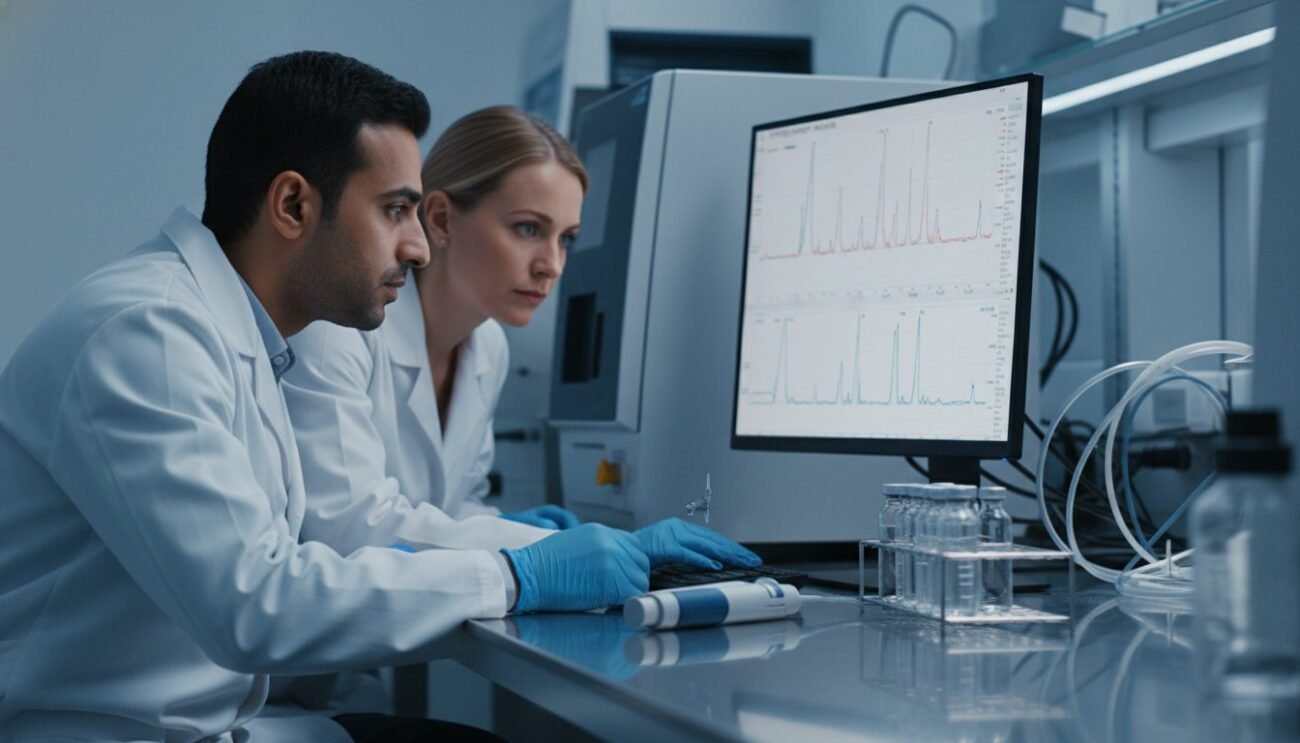
The integrity of laboratory data depends entirely on the chemical fidelity of the reagents used. High-Performance Liquid Chromatography (HPLC) serves as the primary diagnostic tool for assessing purity by separating the constituent molecules within a sample. In a professional research environment, the area under the main peak of an HPLC chromatogram represents the percentage of the target peptide. While HPLC determines purity, Mass Spectrometry (MS) provides the definitive confirmation of molecular identity. It verifies that the synthesized chain matches the 1419.5 g/mol molecular weight of the BPC-157 pentadecapeptide. Without these dual layers of verification, investigators risk introducing variables that can invalidate months of experimental work. Researchers who buy BPC-157 research peptide must demand these reports to ensure they aren’t working with truncated sequences or manufacturing byproducts.
Common impurities found in lower-tier peptides include residual solvents and Trifluoroacetic acid (TFA) residues. TFA is frequently used during the peptide cleavage process; however, excessive residual levels can alter the pH of a reconstituted solution, potentially interfering with sensitive biological assays. Third-party, independent laboratory testing remains the gold standard for verifying these metrics. It provides an unbiased audit of the manufacturer’s claims, ensuring that every vial of BPC-157 5mg meets the rigorous standards required for peer-reviewed science. Relying on in-house testing alone often lacks the transparency necessary for high-stakes research. For a comprehensive framework on interpreting these analytical documents, researchers can consult this detailed guide on evaluating BPC-157 purity standards for laboratory use, which provides a step-by-step checklist for verifying the authenticity of a BPC-157 research chemical.
Key Metrics in a Certificate of Analysis (COA)
A Certificate of Analysis is more than a formal document; it’s a blueprint of the peptide’s quality. When reviewing a COA, the purity percentage is the first metric to examine. Elite laboratory standards dictate a purity of 99% or higher. Anything below 98% is generally considered unsuitable for precise research due to the unknown impact of the remaining contaminants. The chromatogram should display a sharp, symmetrical peak with minimal baseline noise. Significant secondary peaks indicate the presence of impurities or degraded peptide fragments. Additionally, always verify the batch number and date of analysis. Freshness is a critical factor in peptide stability, as even lyophilized powders can degrade over extended periods if not stored under optimal conditions.
Red Flags in Peptide Sourcing
Transparency is the hallmark of a reliable supplier. A primary red flag is the failure to provide batch-specific COAs upon request. Some suppliers distribute ‘generic’ or ‘representative’ reports that don’t correspond to the physical vial in the researcher’s possession. This practice masks variations in production quality and poses a significant risk to experimental reproducibility. Another concern is improper lyophilization. If the powder appears collapsed or discolored, it may indicate moisture ingress or thermal stress during processing. When you buy BPC-157 research peptide, the product must arrive as a uniform, white cake or powder, vacuum-sealed to preserve its structural integrity. Compromised physical characteristics often correlate with poor analytical results and inconsistent data.
Logistics and Handling: Reconstitution and Storage Protocols
The acquisition of high-purity reagents is merely the first stage in ensuring experimental validity. Once you buy BPC-157 research peptide, the responsibility shifts to maintaining the molecular stability of the 15-amino acid sequence through rigorous handling protocols. Lyophilized peptides are inherently sensitive to thermal fluctuations and UV exposure. For short-term storage of up to several weeks, maintaining the vials at 4°C is generally sufficient. However, for long-term preservation extending beyond several months, researchers should store the lyophilized powder at -20°C or -80°C to prevent slow degradation. Mechanical agitation also poses a significant risk to these delicate structures. Vigorous shaking can disrupt the hydrogen bonds that maintain the peptide’s secondary structure, potentially rendering the compound inert before the research even begins.
Light exposure is another variable that demands strict control. UV radiation can catalyze the cleavage of peptide bonds, particularly in sequences containing sensitive residues. Storing vials in dark environments or utilizing amber glass containers is a procedural necessity in any high-tier laboratory. Calculating the final concentration requires a meticulous approach to diluent volume. For a 5mg vial, adding 2ml of Bacteriostatic Water yields a concentration of 2.5mg/ml, which serves as a standard benchmark for many tissue repair models. This precision ensures that multi-dose research protocols remain consistent across the entire study duration.
Cold Chain Logistics and Integrity
Cold chain logistics are vital for preserving the industrial-tier quality established during production. Upon arrival, a visual inspection of the lyophilized ‘cake’ provides immediate insight into the vial’s integrity. A firm, uniform cake suggests the vacuum seal remains intact and moisture ingress hasn’t occurred. If the powder appears collapsed or ‘melted,’ it may indicate a breach in the cold chain during transit, necessitating a review of the batch’s analytical viability. Immediate transfer to specialized laboratory refrigeration is required to halt any potential thermal degradation and ensure the compound’s prestige remains uncompromised.
Reconstitution Best Practices
Reconstitution requires an aseptic environment and precise calculations to ensure multi-dose consistency. Bacteriostatic Water is the preferred diluent for most protocols because its 0.9% benzyl alcohol content inhibits microbial growth during the study period. When introducing the diluent, use the ‘slow-drip’ method by aiming the needle at the vial’s inner wall. This allows the liquid to gently cascade over the powder, preventing the shearing forces associated with direct high-pressure contact. Once reconstituted, the solution’s shelf life diminishes significantly. It must be stored between 2°C and 8°C at all times. To maintain the highest standards of laboratory precision, researchers can buy BPC-157 5mg vials that are specifically optimized for these rigorous storage and reconstitution protocols.
Prime Axis Peptides: Precision Sourcing for the Scientific Community
Prime Axis Peptides functions as a vital resource for investigators who prioritize technical rigor and procedural transparency. Our operations are built on the premise that scientific progress requires reagents of the highest possible caliber. We maintain a strict 99%+ purity benchmark for every BPC-157 5mg vial, a standard verified through independent, third-party analysis. This commitment ensures that when you buy BPC-157 research peptide, the compound’s chemical profile aligns perfectly with the established 1419.5 g/mol molecular weight benchmark. We provide comprehensive documentation, including batch-specific HPLC and Mass Spectrometry reports, to eliminate the uncertainty often associated with secondary market suppliers. By removing these variables, we allow the scientific community to focus on the underlying mechanisms of action, such as the GHR pathways and NO system modulation discussed earlier. You aren’t just procuring a chemical; you’re securing the reliability of your future data.
The Prime Axis Standard of Procedural Integrity
The synthesis of complex pentadecapeptides requires meticulous oversight at every stage. We manage the entire lifecycle of our compounds, from the initial amino acid assembly to the final lyophilization process. This oversight prevents the formation of truncated sequences or the retention of harmful residual solvents that could compromise cellular assays. Our fulfillment protocols are equally disciplined. Each vial is vacuum-sealed and handled within a strict cold-chain framework to protect its molecular stability during transit. We provide the technical documentation necessary for advanced researchers to integrate these compounds into sophisticated experimental designs without hesitation. Our experts understand that a breach in protocol at any point can invalidate months of data; therefore, we treat every shipment with the clinical gravity it deserves.
Securing High-Purity BPC-157 for Your Laboratory
Streamlining the procurement process for academic and private research institutions is a core objective of our service model. We offer a comprehensive catalog designed to support complex laboratory setups, including complementary compounds such as TB-500 5mg and GHK-Cu 50mg. To ensure researchers have all necessary components for immediate implementation, we also supply Bacteriostatic Water 30ml. This allows for the precise and aseptic reconstitution protocols required for multi-dose study designs. Our distribution is strictly limited to laboratory research use. This adherence ensures that our chemical integrity remains uncompromised by the laxer standards of the consumer market. Investigators can rely on us as a pillar of stability in an evolving regulatory landscape.
Secure Research-Grade BPC-157 from Prime Axis Peptides
Advancing Scientific Discovery through Analytical Precision
The path to reproducible breakthroughs in tissue repair research begins with the uncompromising quality of your chemical reagents. As established, the efficacy of experimental protocols depends on a sequence’s molecular integrity, specifically its 99% purity threshold and correct 15-amino acid characterization. By prioritizing batch-specific HPLC and Mass Spectrometry data, you eliminate the variables that often compromise laboratory results. When you buy BPC-157 research peptide, you’re investing in the stability of your data and the potential for significant scientific advancement. Adhering to rigorous storage and reconstitution standards ensures the peptide’s structural integrity remains intact from the initial synthesis to the final assay. We provide the foundation for prestigious research through our research-grade lyophilized powder and transparent analytical testing. Your dedication to excellence drives the future of molecular science. We look forward to supporting your next major discovery in the laboratory.
Order High-Purity BPC-157 for Research at Prime Axis Peptides
Frequently Asked Questions
Is BPC-157 legal for research purposes in the United States?
BPC-157 is legal for purchase and use exclusively within laboratory research settings. As of May 2026, the compound occupies a transitional regulatory space following its removal from the FDA Category 2 list in April 2026. While it isn’t yet approved for human consumption or pharmacy compounding, it remains a legitimate reagent for scientific inquiry. The upcoming PCAC review scheduled for July 23-24, 2026, will further clarify its status for future clinical applications.
What is the difference between BPC-157 5mg and BPC-157 10mg vials?
The primary distinction lies in the total quantity of lyophilized peptide contained within the vacuum-sealed vial. While 10mg options exist in the broader market, the 5mg vial remains the industrial standard for maintaining high-precision concentrations in smaller laboratory models. Choosing to buy BPC-157 research peptide in 5mg increments allows for better inventory management and reduces the risk of accidental degradation during the reconstitution phase of multi-dose experimental protocols.
How should BPC-157 be stored before and after reconstitution?
Prior to reconstitution, the lyophilized powder should be stored at -20°C for long-term stability or 4°C for short-term use. Once the peptide is reconstituted with a diluent, it becomes significantly more fragile. It must be refrigerated at temperatures between 2°C and 8°C to maintain its molecular integrity. Exposure to light and room temperature for extended periods will accelerate enzymatic breakdown and compromise the validity of your experimental data.
What are the common signs of peptide degradation in BPC-157?
Visual indicators of degradation include cloudiness or the presence of visible particulates in the solution after reconstitution. In its lyophilized state, a collapsed or discolored “cake” suggests moisture ingress or thermal stress during transit. These physical changes often correlate with a loss of secondary structure and reduced biological activity. Researchers should always cross-reference these physical signs with batch-specific HPLC reports to confirm that the peptide’s purity remains above the 99% threshold.
Why is Bacteriostatic Water preferred over Sterile Water for peptide research?
Bacteriostatic Water contains 0.9% benzyl alcohol, which serves as a preservative to inhibit microbial growth. This makes it the superior choice for multi-dose research protocols where the vial’s septum is punctured several times. In contrast, Sterile Water lacks these antimicrobial properties and is intended for single-use applications only. Utilizing Bacteriostatic Water ensures that the solution remains sterile and the peptide structure is protected from bacterial contamination throughout the study’s duration.
Does BPC-157 require cold shipping to maintain its purity?
Cold shipping is an essential procedural safeguard to prevent thermal degradation during transit. While lyophilized peptides are more stable than liquid solutions, exposure to high ambient temperatures can still disrupt the delicate hydrogen bonds of the 15-amino acid sequence. Professional-grade logistics utilize insulated packaging and cold-chain monitoring to ensure the product arrives at your facility with its 99%+ purity intact. Maintaining this temperature control is a non-negotiable standard for elite-tier laboratory suppliers.
How do I verify the purity of the BPC-157 I purchased?
Verification requires access to High-Performance Liquid Chromatography (HPLC) and Mass Spectrometry (MS) data. HPLC confirms the purity percentage by measuring the area under the main peak; anything below 99% indicates suboptimal quality. Mass Spectrometry verifies the molecular identity by confirming the sequence matches the 1419.5 g/mol benchmark. Researchers should always demand batch-specific Certificates of Analysis (COAs) rather than generic reports to ensure the analytical data corresponds directly to the physical vial purchased. A structured BPC-157 research chemical purity verification checklist can serve as a practical reference when auditing supplier documentation and chromatographic data.
Can BPC-157 be used in combination with TB-500 in research models?
BPC-157 and TB-500 are frequently utilized in combination within musculoskeletal and angiogenesis research models. Studies suggest that these peptides may exert synergistic effects by targeting different stages of the repair process; BPC-157 modulates growth factor receptors while TB-500 promotes cellular migration. When researchers buy BPC-157 research peptide alongside TB-500 research peptide, they can investigate more complex regenerative pathways that a single peptide sequence might not fully capture in isolation.





2 thoughts on “Buy BPC-157 Research Peptide: Analytical Review of Purity and Tissue Repair Applications”